
The world has never been more connected.
And perhaps that is exactly why people are looking for ways to disconnect.
Our days are filled with notifications, messages, meetings, screens, choices and constant movement. Even when we are technically resting, we are rarely completely away from the noise.
A retreat creates something that everyday life increasingly struggles to offer: a defined space to stop.
Not just for a few hours. For several days.
A place where the rhythm changes, attention becomes quieter, and people have enough distance from their normal lives to reconnect with themselves, their bodies and each other.
This is one reason we believe retreats will become even more relevant in 2027.
From wellness as performance to wellness as recovery
For years, wellness travel was often associated with optimisation.
Better sleep. Better fitness. Better nutrition. Better performance.
But the direction is changing.
Recent wellness travel research points towards nervous-system regulation, deep rest, privacy, nature and more restorative experiences. The Global Wellness Institute identified “The Nervous System Reset,” “The Luxury of Privacy” and “Deep Rest” among its major 2026 wellness tourism trends.
Hilton’s 2027 travel research points in a similar direction. In a survey of more than 14,000 travellers, 65% said they actively seek experiences that calm the body and reset the nervous system, while 76% said travel helps them recharge mentally and physically in ways they cannot easily achieve at home.
This is interesting for retreat leaders.
Because a retreat doesn’t necessarily need to give people more.
It can give them less.
Less noise.
Less choice.
Less stimulation.
Less rushing.
And more space to experience what is already there.
People are looking for something they cannot create at home
You can meditate in your bedroom.
You can practise yoga from YouTube.
You can go for a run.
You can delete Instagram for a week.
But there is something different about physically leaving your normal environment.
The journey itself creates a boundary.
You arrive somewhere unfamiliar. Your routine changes. Your phone becomes less important. Someone else prepares your meals. You wake up with nature instead of traffic. You spend several days with people who have come for the same reason.
That is the power of a retreat.
It is not simply a collection of activities.
It is an environment designed to make a different way of living possible, even if only for a few days.
And this is also why the destination matters.
The retreat is bigger than the programme
A great retreat is not only about what happens on the schedule.
The yoga class matters.
The breathwork matters.
The food matters.
The workshops matter.
But so does what happens between them.
The walk back to the room.
The quiet morning before breakfast.
The conversation around the table.
The river after a long practice.
The afternoon when there is nowhere to be.
The feeling of being surrounded by nature instead of notifications.
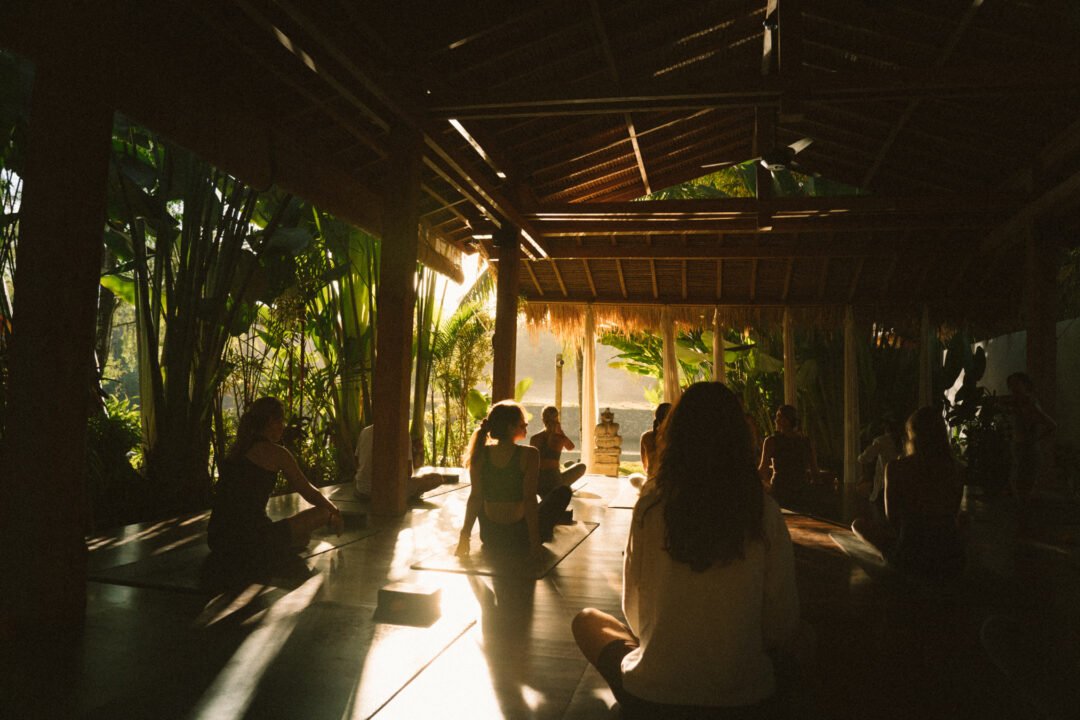
For retreat leaders, this means choosing a venue is not simply about finding enough rooms and a beautiful shala.
You are choosing the container for the experience.
At Yama, we think about the space this way.
Our role is not to create the retreat for you. Your practice, teaching and community remain at the centre.
Our role is to create the conditions around it.
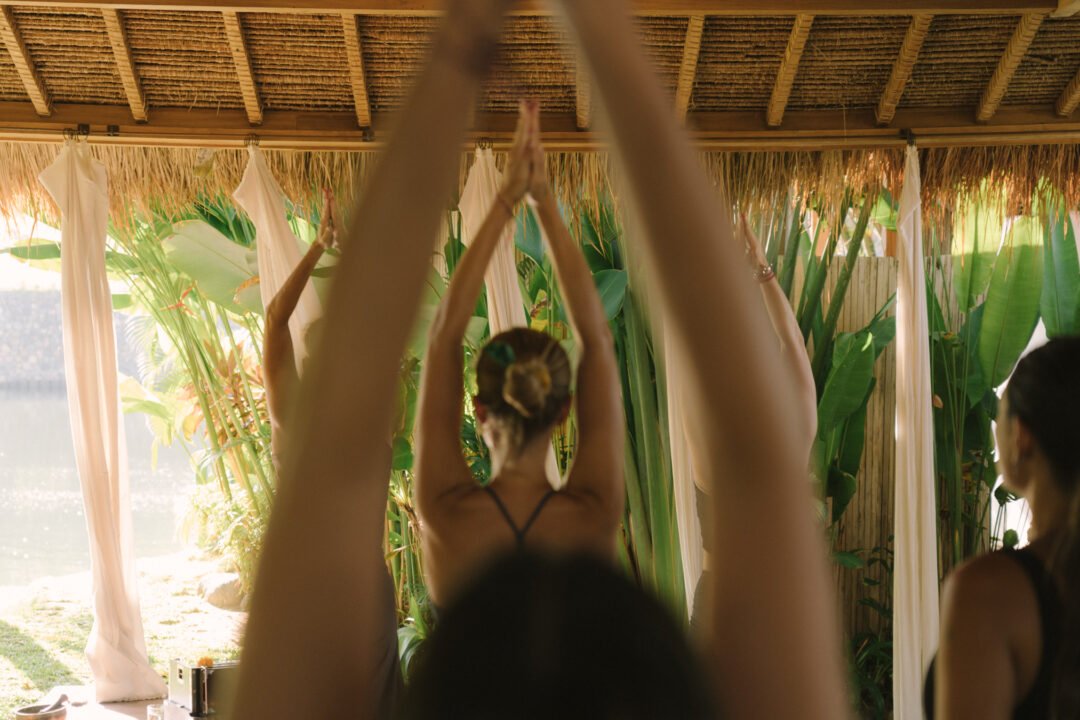
A private setting in Balian. A shala surrounded by nature. Rooms that allow guests to properly rest. Food prepared on site. Space for treatments, rituals, conversations and quiet moments.
And, perhaps most importantly, a team that understands that a retreat is different from a normal hotel stay.
What is changing for retreat leaders in 2027?
The retreat industry is becoming more diverse.
Yoga and meditation remain important, but retreat guests are increasingly interested in broader experiences around movement, nervous-system regulation, nature, creativity, connection and personal growth.
Recent retreat data also points towards growing interest in restorative and natural wellness, while more performance-oriented categories such as biohacking remain relatively niche. Somatic therapy and sound healing are among the areas showing particularly strong growth.
That opens the door for many different kinds of retreat leaders.
Yoga teachers.
Movement practitioners.
Breathwork facilitators.
Sound therapists.
Meditation teachers.
Fitness coaches.
Therapists.
Artists.
Creative communities.
Founders and small groups looking to create something more meaningful than a conventional holiday.
The common denominator is not necessarily the discipline.
It is the desire to bring people together around a shared experience.
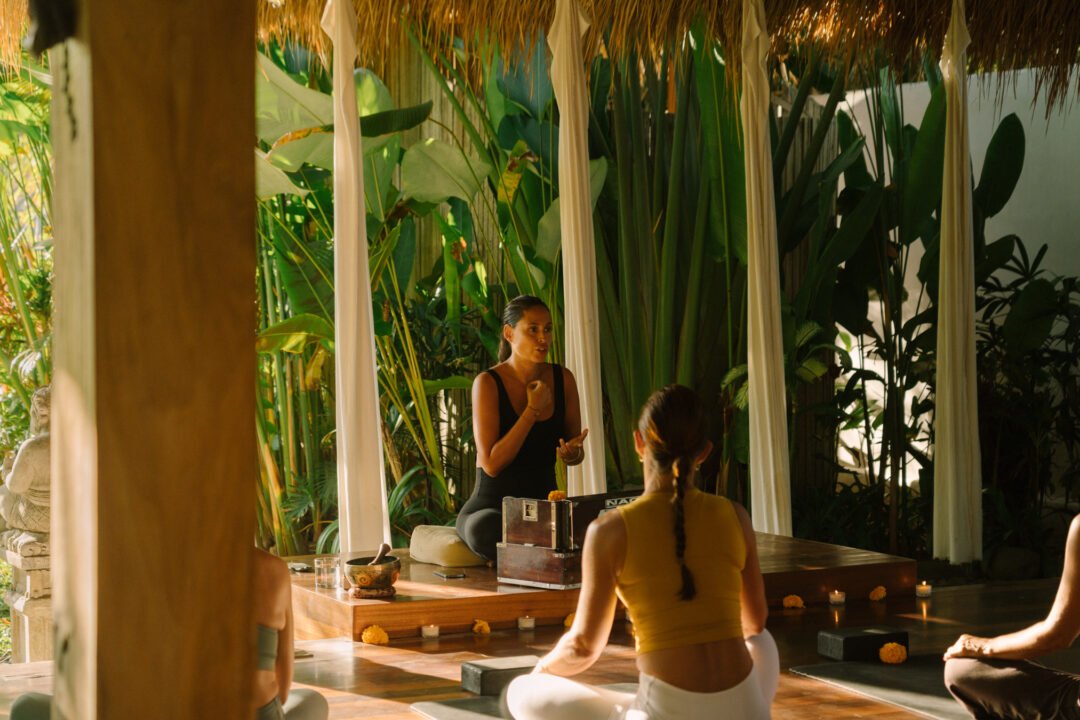
And hosting a retreat is more than teaching it
This is the part people sometimes discover too late.
Creating the programme is one thing.
Running the retreat is another.
There are guests to communicate with.
Rooms to coordinate.
Arrival and departure times.
Food requirements.
Transfers.
Daily schedules.
Payments.
Staff.
Equipment.
Activities.
Last-minute changes.
And dozens of small details that guests should never have to think about.
The best retreat experience often feels effortless precisely because someone has taken care of everything behind the scenes.
This is where having the right retreat partner makes a difference.
At Yama, we work with retreat leaders before the first guest arrives.
We help shape the practical side of the experience, from accommodation and meals to spaces, schedules and on-the-ground coordination.
Because your attention should be where it matters most:
with your people.
Why Bali still makes sense
Bali has changed enormously over the past decade.
But the reason people continue to come here for retreats is surprisingly simple.
Nature.
Culture.
Warmth.
Movement.
And the ability to step away from the life they normally live.
Bali has also become one of the world’s most established wellness destinations, with an increasingly sophisticated range of retreats and wellness experiences.
But you don’t have to be in the middle of the island’s busiest wellness districts to experience it.
In Balian, on the west coast, life moves differently.
The ocean.
The rice fields.
The temples.
The evenings that become quiet early.
And enough distance from Bali’s busiest centres to create a genuine sense of retreat.
That distinction matters.
Because sometimes the best retreat destination is not the place with the most things to do.
It is the place where people finally feel they don’t need to do anything.
Thinking about your 2027 retreat?
If you have been thinking about bringing your community to Bali in 2027, now is a good time to start the conversation.
The earlier we work together, the more we can help you shape the experience rather than simply find a few available rooms.
Whether you are planning a yoga retreat, movement programme, meditation journey, breathwork retreat or something entirely your own, we can help you create the space around your work.
You bring the people and the practice.