

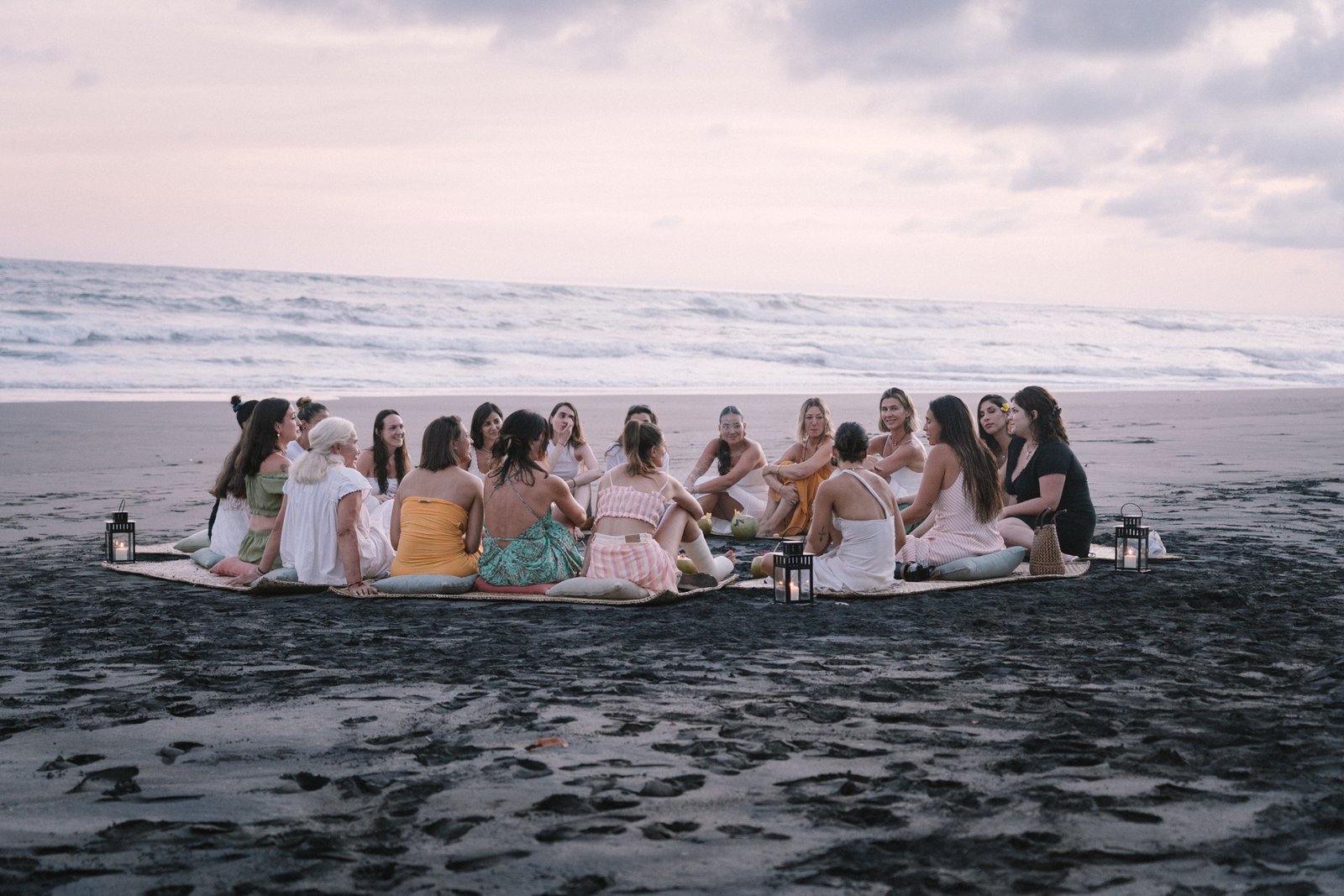
When we think about retreats, we often think about what we will do.
Yoga.
Meditation.
Breathwork.
Ceremony.
But long before any of these practices begin, something else has already started shaping the experience.
The place itself.
Every landscape carries a rhythm. Some ask us to move faster, consume more, and keep our attention divided. Others quietly invite us to slow down.
This is why choosing a retreat location is about far more than beautiful scenery. It is about creating the conditions that allow people to arrive—not only physically, but mentally and emotionally.
Nature Changes the Way We Feel
There is growing understanding within environmental psychology that humans are naturally drawn toward the living world—a concept known as the Biophilia Hypothesis.
Time spent among trees, rivers, and open landscapes does more than offer beautiful views. It helps regulate the nervous system, soften mental fatigue, and restore attention.
No luxury amenity can fully replace what nature offers simply through its presence.
Fewer Distractions, Deeper Presence
Many retreat destinations have become increasingly vibrant.
Bustling cafés.
Busy streets.
Endless places to explore.
While these spaces have their own appeal, they can also compete with the inward journey a retreat invites.
Quieter regions of Bali offer something different.
Without constant stimulation, participants are gently encouraged to remain with the experience unfolding before them. The absence of distraction becomes part of the practice itself.
The Rhythm of West Bali
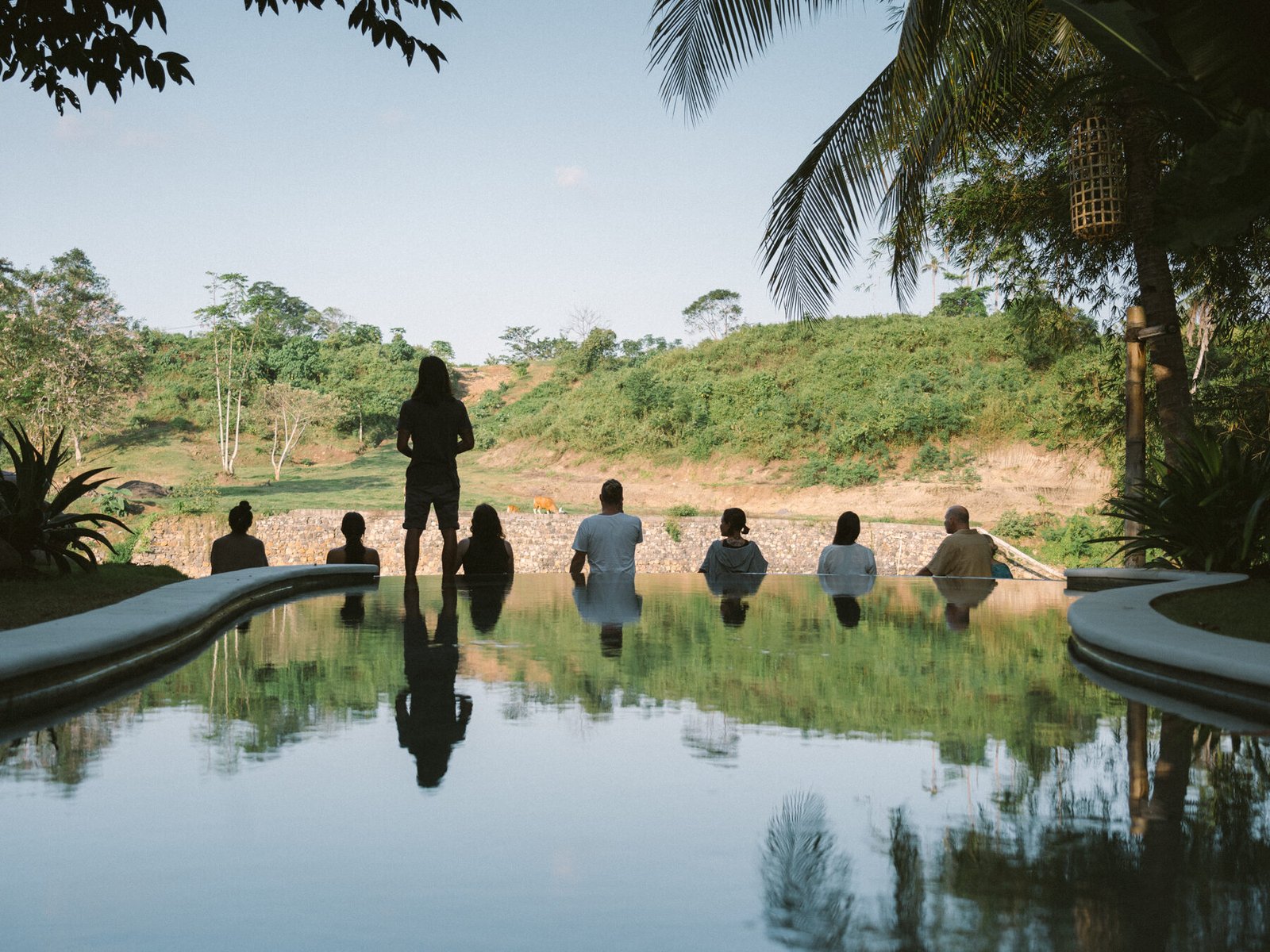
In places like Balian, the day is shaped by tides rather than traffic.
The river meets the ocean.
Black volcanic sand absorbs the warmth of the afternoon sun.
Village ceremonies continue as they have for generations.
Life moves at a quieter pace.
This slower rhythm naturally invites participants to breathe more deeply, notice more carefully, and reconnect with the world around them.

A Landscape That Supports Inner Work
The environment influences more than mood.
Natural soundscapes—the movement of leaves, flowing water, birdsong, and waves—allow the mind to rest without becoming disengaged. Environmental psychologists describe this as soft fascination, a quality that helps restore mental clarity and supports deeper reflection.
For retreat participants, this creates space for practices such as meditation, journaling, and breathwork to unfold with greater ease.
Not Every Retreat Needs the Crowd
Some people are nourished by movement and constant activity.
Others are seeking something quieter.
A place where conversations continue around a shared table instead of disappearing into the nightlife.
A place where evenings end beneath the stars instead of city lights.
For facilitators, this means holding a more connected group experience.
For participants, it means having the opportunity to stay fully present with the journey they came for.
Returning to Simplicity
Perhaps this is what places like West Bali continue to offer.
Not escape.
Not isolation.
But enough quiet to remember what everyday life often asks us to forget.
Because transformation rarely comes from doing more.
Sometimes, it begins by choosing a place that asks less of us—and gives us more room to simply be.